The 40: February 1985

February 1985: No new issue of Tilt. The January issue covered both January and February, so the editorial team had probably taken a vacation in December 1984! So, go ahead and revisit the 40, 30, 20, 10, 0 from January 2025!
The 30: February 1995
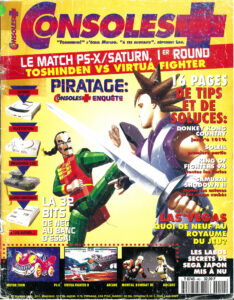

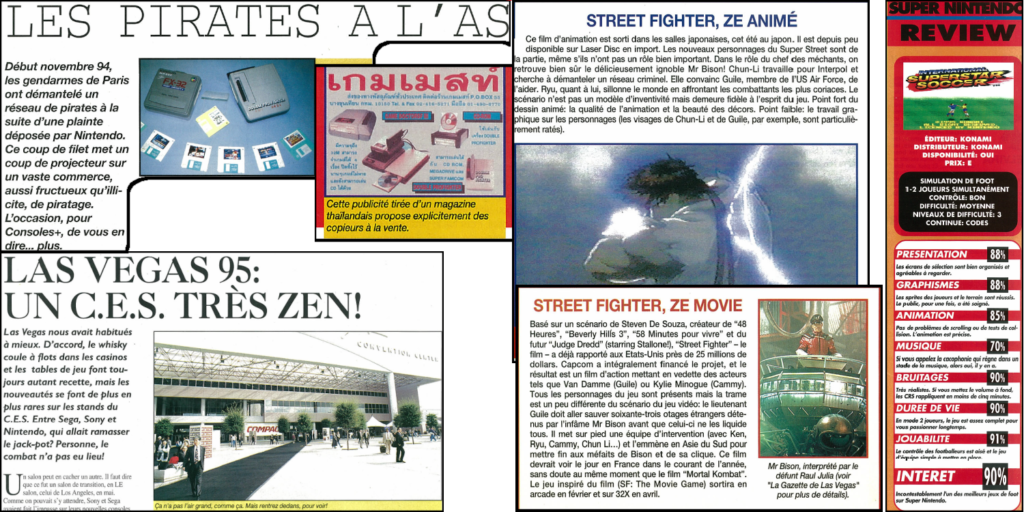
During the 1990s, the gaming industry was obsessed with one concept: the Console War. After the Nintendo vs. Sega showdown, Consoles + saw the emergence of the new 32-bit era as the beginning of a new rivalry between Sony and Sega. The magazine’s cover featured a Toshinden vs. Virtua Fighter comparison, the first of many to come. However, in the winter of 1995, Consoles + also covered the CES (Consumer Electronics Show) in Las Vegas, a major electronics expo where companies traditionally unveiled their plans for the coming year. The 1995 edition of the event seemed underwhelming, but with 30 years of hindsight, it makes sense: in May 1995, the first-ever E3 (Electronic Entertainment Expo) would take place. Unlike CES—which still exists today and covers not just electronics but also home appliances and various household devices—E3 was a game-exclusive event that went on to define the industry for the next 25 years (until its demise in 2023). Consoles + also mentioned the Street Fighter movie and anime—two legendary adaptations of the fighting game franchise. The anime became a benchmark for video game adaptations, while the movie gained notoriety as an infamous B-movie. The magazine also featured a special report on piracy, a timeless issue in gaming. Lastly, Consoles + reviewed International Superstar Soccer, the very first installment in what would later become the PES (Pro Evolution Soccer) series. Much like E3, PES would dominate the industry for a quarter of a century before eventually fading into obscurity.
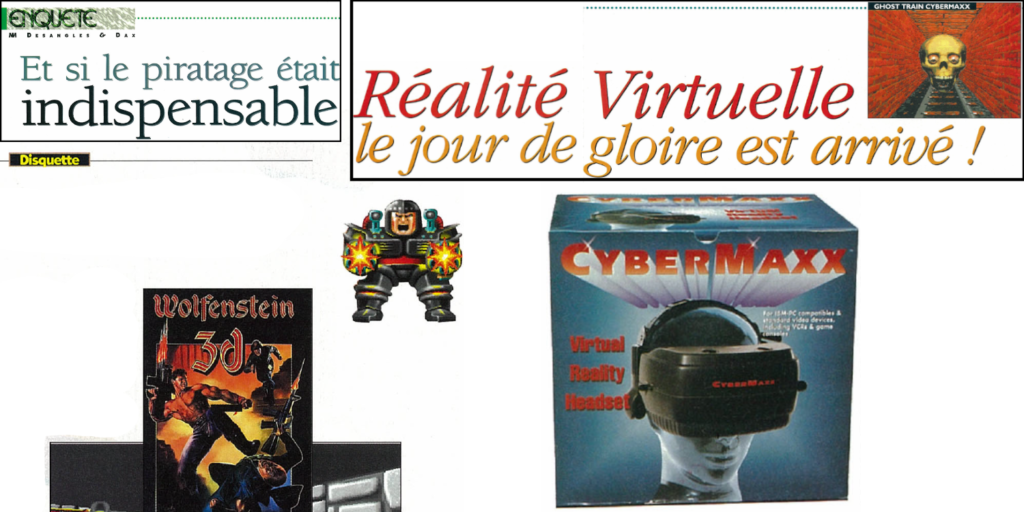
In February 1995, piracy seemed to be a hot topic. Even Joystick ran a feature on the subject. (Bob provides some context: in November 1994, a massive crackdown on the French piracy scene took place at Nintendo’s request). Joystick also boldly claimed that “the glorious day of Virtual Reality has finally arrived!” Bob admires their optimism, but 30 years later, VR is still struggling to take off, much to his dismay. Finally, as further proof that Apple has never been a friend to gamers, the magazine reviewed Wolfenstein 3D on Mac OS—just months before PC gamers would get to enjoy Doom II and Duke Nukem 3D…
The 20: February 2005


February 2005 seems to have been a relatively quiet month. Consoles + dedicated a feature to Gran Turismo 4, a legendary racing game, but it had already been released in Japan in December 2004 and wouldn’t arrive in France until March 2005. This somewhat off-timed feature highlights the lack of major gaming news at the time. The magazine also ran a piece on Resident Evil 4, another soon-to-be legend, further proving that the editorial team had to fill some pages. In 2005, mobile phones (they weren’t called smartphones yet) were transitioning to 3G, and the magazine explained this new technology to its readers. The news cycle may have been slow, but several great games were reviewed, including Dragon Quest VIII, Minna No Golf, and KOTOR 2. However, these titles had already been extensively covered in 2004 through import features and previews, so they no longer carried the impact of fresh releases. A noteworthy mention goes to the advertisement for Big Ben Interactive’s BodyPAD, the king of failed gaming accessories. Long before the motion gaming era of the Wii and Kinect, this peripheral claimed to let players control fighting games with a few cheap sensors. Needless to say, it never actually worked!
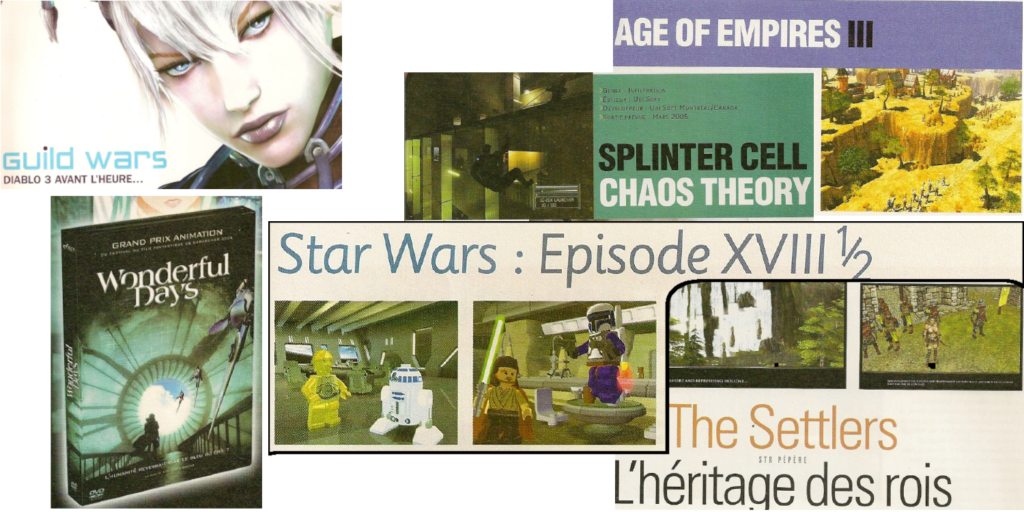
Joystick predicted that 2005 would be the year of the MMORPG and dedicated its cover to Guild Wars, an online RPG (which wouldn’t fully fit the MMORPG definition until its sequel) that had its moment of glory in the early 2000s before the franchise, which still exists today, faded into relative obscurity. Bob had a wave of nostalgia (and felt old) upon spotting an ad for the Wonderful Days DVD, a Korean animated film that made a strong impression back in the day. If you haven’t seen it, I highly recommend it (though I hope it hasn’t aged too much—I haven’t watched it in 20 years!). In a way, it foreshadowed the Korean wave that has taken over in recent years, with manhwas, K-pop, and Korean dramas replacing the manga, J-pop, and Japanese dramas of my youth. A true sign of changing times, further confirmed by the reviews and previews of what would be the final installments of now-forgotten game franchises: Age of Empires, Splinter Cell, and The Settlers. But the next generation was already making its mark with Lego: Star Wars, one of the first entries in a franchise that would go on to have a bright future!

The 10: February 2015
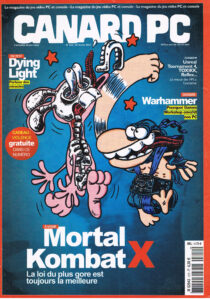

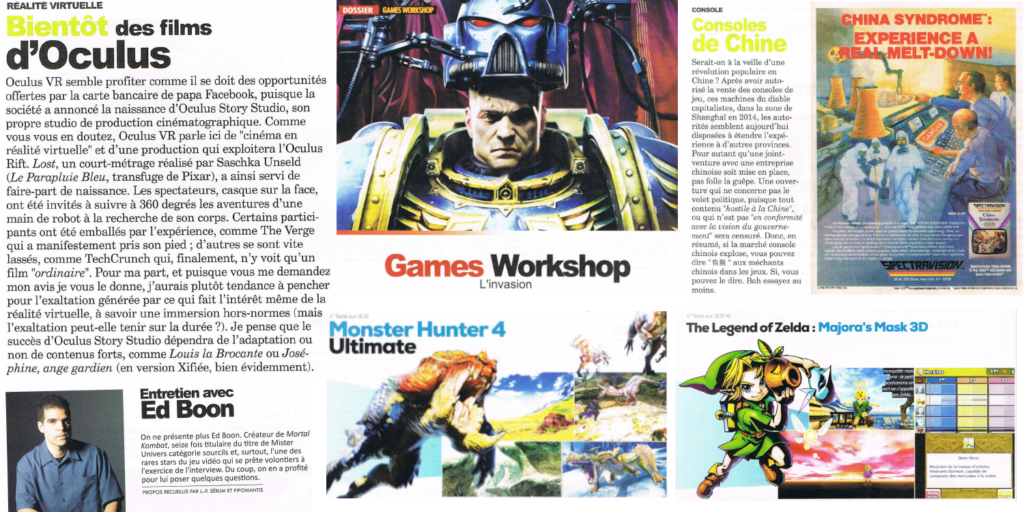
There was only one issue of Canard PC in February 2015, featuring Mortal Kombat X on the cover, with a short interview with co-creator Ed Boon. Virtual Reality was still waiting for its “glorious day,” and Oculus announced the launch of Oculus Story Studio to produce VR films. The future was on its way! (Or not: the studio shut down in 2017 after making just three films…). However, Canard PC was spot on in predicting the wave of Games Workshop titles, a trend that has yet to dry up—for better or worse. Ten years before Black Myth: Wukong, the magazine also touched on China’s shifting stance on video games. Again, for better or worse (mostly worse, to be honest). Lastly, let’s remember that handheld consoles still existed in 2015. Well, just one—the Nintendo 3DS, which was still going strong with the releases of Monster Hunter 4 Ultimate and Majora’s Mask 3D.
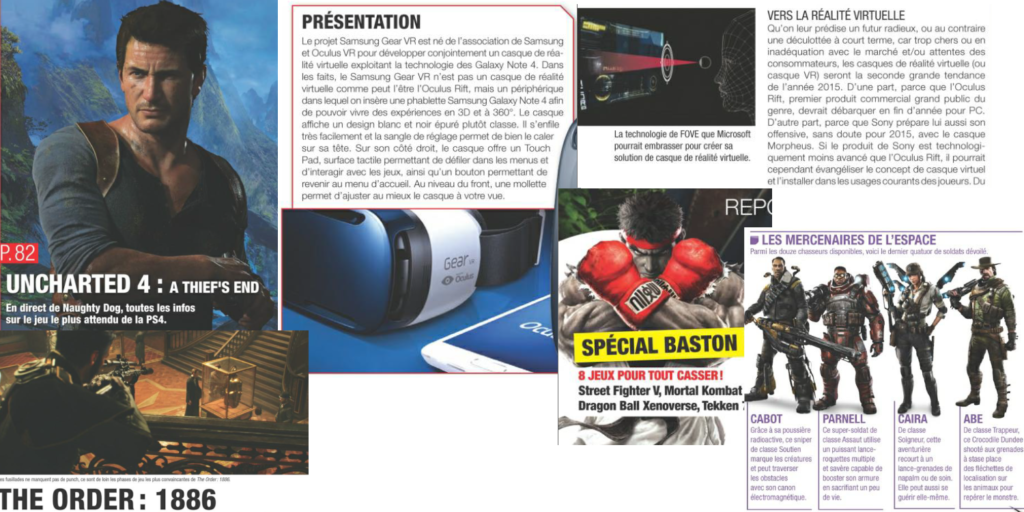
Jeux Vidéo Magazine secured the “exclusive” preview of Uncharted 4, the final (and excellent) entry in a series I truly miss—though to be fair, Naughty Dog had pretty much exhausted the concept. Proof that gaming is cyclical, the “glorious day” of VR was once again being proclaimed, with a feature covering the latest technology and upcoming devices. In 2015, VR was neither dead nor truly alive. Meanwhile, the fighting game genre had made a full comeback thanks to Street Fighter IV (2008) and the Mortal Kombat reboot (2011), making it the perfect time for a feature on this revived genre. And, as a reminder that the gaming industry sells dreams that don’t always come true, the magazine reviewed two games that were hyped as instant classics but ended up being disappointments: The Order: 1886 and Evolve. The former had stunning art direction but lacked gameplay depth, while the latter had a brilliant concept on paper but was impossible to execute properly in practice. Still, both were bold attempts, and that deserves recognition.
The 0: February 2025

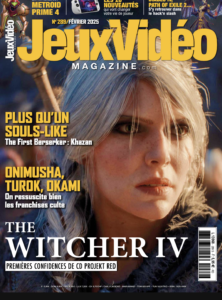
In forty years, gaming has matured and broken free from its technical limitations. Now recognized as a full-fledged cultural medium, it allows for a wide range of experiences. Canard PC features The Alters on its cover, a narrative-driven game that Bob will probably never play but one that dares to take an unconventional path. I sincerely hope it finds its audience. Meanwhile, the CES article (which has embraced the AI trend) reminds us once again that our industry loves to repeat itself. With E3 now a thing of the past, CES is once again in the spotlight—a surprising turn in an era overflowing with dedicated gaming expos and online announcements. Business is business, I suppose… Canard PC and Jeux Vidéo Magazine both cover VR headsets, suggesting that February must be the hot season for virtual reality. Otherwise, it’s a fairly quiet period, pushing Jeux Vidéo Magazine to look ahead to The Witcher IV. Will it be the next big hit or an unnecessary sequel? Only time will tell. Finally, it’s amusing to note that while the magazine is running a feature on resurrected franchises, its news section mentions Daisy Ridley—a victim of the infamous Star Wars lead actor curse, seemingly doomed to a careerless future in film—now being brought in to introduce Monster Hunter to a new generation of players. Cyclical, I tell you!