
2026 is well underway, and so far it has been marked by two related announcements that—despite generating plenty of commentary—ultimately come as no surprise: Sony has announced it is abandoning physical media, and Rockstar has announced that GTA VI will be released exclusively in digital form. This is no revolution, but rather an evolution that those of us in the gaming community have been anticipating with varying degrees of apprehension—and, ultimately, the conclusion of a war that console giants Sony and Microsoft launched against physical media several decades ago. But before examining the reasons for this shift and its consequences, a brief look back at this battle—which is now ending in defeat for physical media—is in order…
Two Decades of Gradually Turning Away From Physical Media
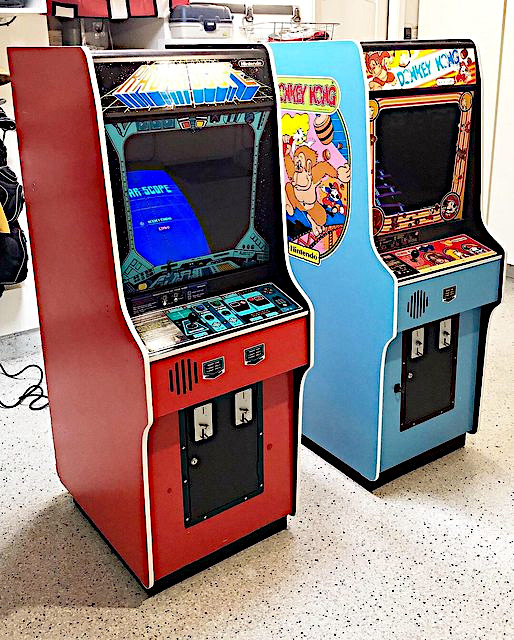
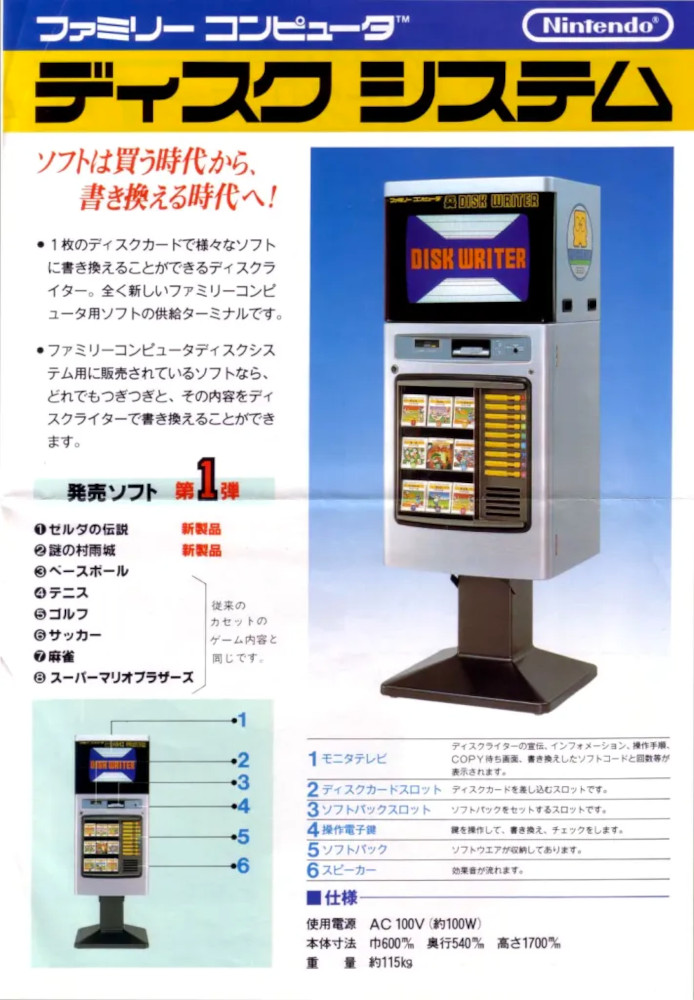
The idea of doing away with physical media is nothing new: back in the ’80s, physical formats were already causing headaches for the video game industry. You may remember (or not, if you’re younger) the logistical problems that led Nintendo to develop Donkey Kong for cabinets originally intended for Radar Scope1—a move that worked out wonderfully for the company—or the 728,000 Atari 2600 cartridges of E.T. buried in New Mexico2! And let’s not forget the royalties on proprietary, protected cartridges that made Nintendo a fortune, a model Sony would draw inspiration from at the start of the PlayStation era. Even so, the earliest attempts at digital distribution were hardly seen as an opportunity the industry should jump on; in particular, the business model Nintendo proposed with the Japan-only Famicom Disk System—downloading games in stores onto a rewritable disk for a fraction of the price of the same game on a cartridge—was widely rejected by third-party publishers, who simply couldn’t make it profitable. But while the console world clung to physical media, the PC world was more receptive to digital distribution: it was common by the late ’90s, ubiquitous by the early 2000s (with the growth of Steam), and dominant even for nongaming software by the 2010s (starting with Windows, which began pushing an all-digital approach with Windows 8 in 2012).
Don’t go thinking, though, that entertainment industry executives already foresaw in the early 2000s that video games would one day go entirely digital: none of the industry’s major players believed in Steam at first3! But the platform has now been up and running—and thriving—for some twenty years, and it would bring about the complete disappearance of physical PC games in just a few years…
It’s hardly surprising, then, that the push toward digital console games came from a crossover player from the PC world: none other than Microsoft. With the original Xbox, Bill Gates’s company set out to blur the line between consoles and PCs: the big black box would become the first console with a built-in hard drive (back in 2001, no less), while the famous XBLA (Xbox Live Arcade) was the first platform to offer digital-only games on consoles (this marked the beginning of gaming’s indie scene, which was able to grow once freed from the logistical constraints of physical distribution). Love or hate Microsoft and its products, there’s no denying its enormous impact on the evolution of console gaming4. As early as 2009, with its “Games on Demand” service, Microsoft began offering downloads of major games—notably Halo 3—that had primarily been distributed as physical releases. A milestone had been reached, with Sony following Microsoft’s lead through the PlayStation Store as early as 2006.
2009 was also the year Sony tried to break free of physical media with the PSP Go: with the PlayStation Portable—and its proprietary UMD storage format—having held its own against Nintendo’s DS, Sony grew emboldened and offered an all-digital version of the handheld. It would be a bust: between players furious at having to buy digital copies of games they already owned and retailers reluctant to sell a product that would steer customers away from their stores, the PSP Go flopped and disappeared with barely a shrug5 in under two years. That misstep doesn’t seem to have fazed Sony all that much: as early as 2015, its president, Andrew House, announced the Japanese console maker’s intention to go all-digital6.
The rest is practically current events: Microsoft introduced subscription gaming with Xbox Game Pass in 2017, then moved into streaming in 2020 with its Ultimate plan, while Sony did exactly the reverse: streaming in 2014 with PlayStation Now, followed by subscription gaming—with downloads—in 2018, eventually leading to the current version of PlayStation Plus. The two rivals ultimately arrived at the same place with the ninth console generation—the current one—with both PlayStation 5 and Xbox Series systems available in “traditional” versions with disc drives and cheaper “digital” versions without them. The logical outcome of two decades of fighting for digital distribution—or against physical media, depending on your perspective!
2026: A Pivotal Year
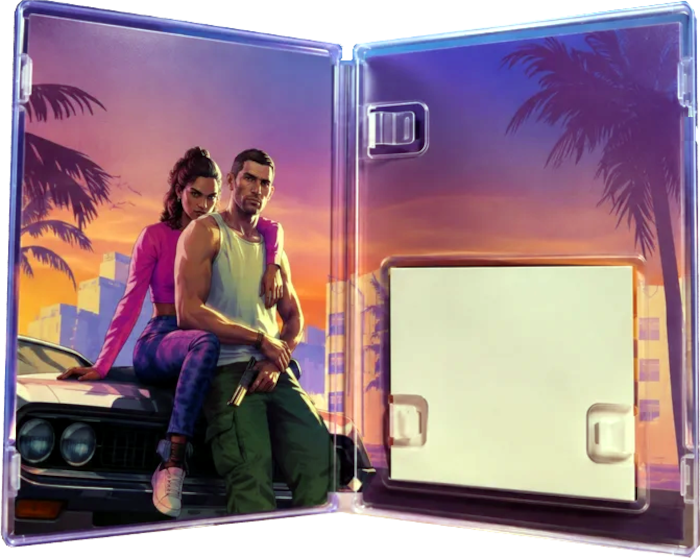
And here we are in good old 2026… Surprisingly, though, the first to fire off an announcement about going digital wasn’t Sony or Microsoft, but another industry heavyweight: Rockstar Games caught everyone off guard on June 24, 2026, by revealing that GTA VI would be digital-only, with boxes sold in stores containing nothing but a download code7! This one came completely out of left field: for months, the discussion had revolved around the game’s price, not its distribution format. There was no time to recover from that knockout punch, though, as Sony followed up on July 1, 2026: the company would stop manufacturing physical discs for PlayStation consoles—a monopoly it had reserved for itself—in January 20288! The news wasn’t entirely unexpected—whether the PS6 would have a disc drive had been the subject of speculation for years—but the announcement’s bluntness and finality were startling. Perhaps more surprising was Microsoft’s August 26, 2026, announcement of its Disc-to-Digital program9, allowing physical discs to be converted into digital licenses… That surprise was short-lived, as the new head of Xbox—Asha Sharma—laid out Microsoft’s vision for its gaming future in October 2026: not a single console, but interoperability among multiple devices10—Xbox, PC, and even an Xbox handheld—within an Xbox ecosystem. Admittedly, we’ve been hearing that promise from Microsoft for years!
The reasons driving the video game industry’s players are numerous—and, as we’ll see, they amount to more than some evil capitalist fantasy—but if this transition really does seem like a done deal this time, it’s simply because the overwhelming majority of gamers—a group that yours truly, old Bob, does not belong to—have voted for digital distribution with the only ballot businesses recognize: their wallets! Although online stores appeared on all three console makers’ platforms around 2005, it wasn’t until 2018 that the market flipped: for the first time, digital took the majority, accounting for 54% of sales11. As in other areas, there would also be a before and after COVID-19: the physical-to-digital split reached 18/82 in 202012… And today? France is putting up something of a fight, with physical games accounting for 42% of console games in 2025—which still means that 58% are digital—but in Europe and the United States, the writing is on the wall: 90% of video game revenue comes from digital13
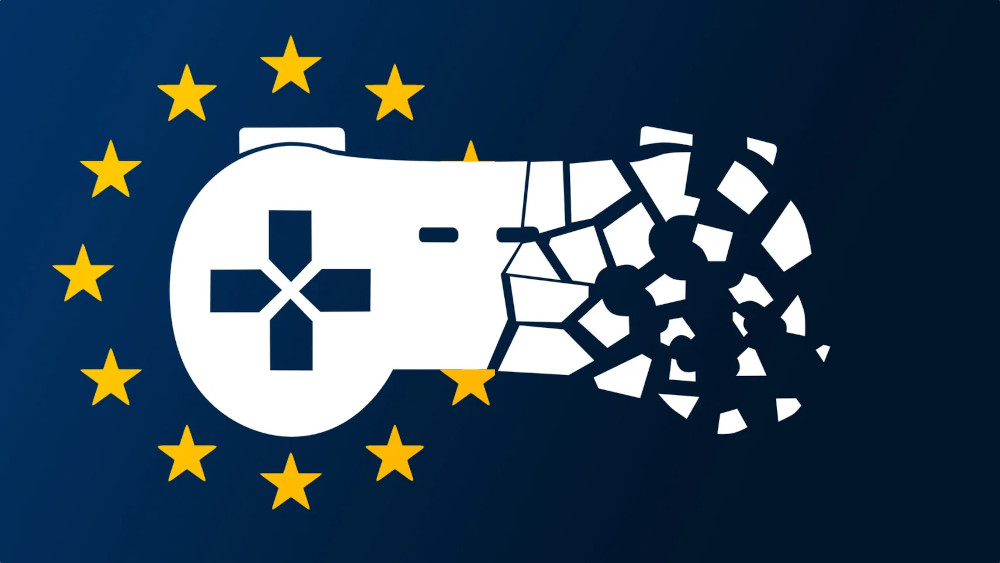
We can regret this situation—I certainly do—and go on at length about everything wrong with it—I’m getting there!—but once again, it was gamers themselves who made this transition possible. So it’s a little late to complain, and an initiative like the European “Stop Destroying Videogames” petition is too late and too naive—as the European Commission diplomatically pointed out in its official response14—to be genuinely useful. I signed it anyway, because getting fucked in the ass without lube doesn’t mean you have to enjoy it, but I’m under no illusions… All that’s left, then, is to take stock: first, understand why the video game industry is so determined to go digital; then, revisit why “digital distribution is evil”©; and finally, honestly acknowledge that none of this is quite the end of the world!
Digital Game Distribution: A Matter of Control
Financial Control
Like it or not, money drives history: every human event can be analyzed and understood through a financial lens, even if other factors help round out the picture. When it comes to today’s topic, the video game industry’s motivation is first and foremost financial. Simply put, digital distribution allows publishers to increase their profit margins and control prices.
Controlling Profit Margins to Push Them Higher
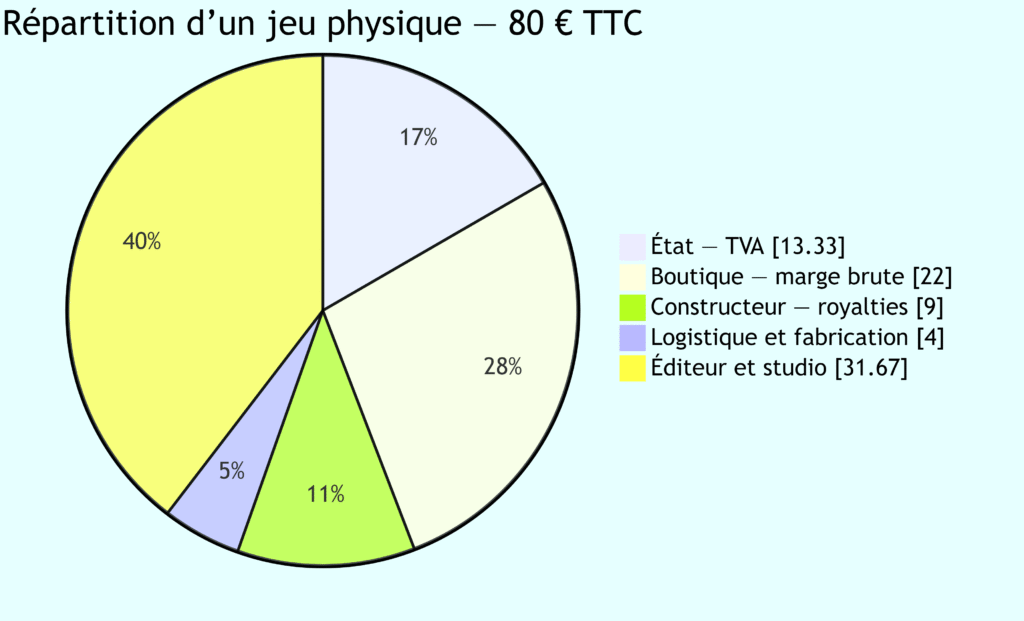
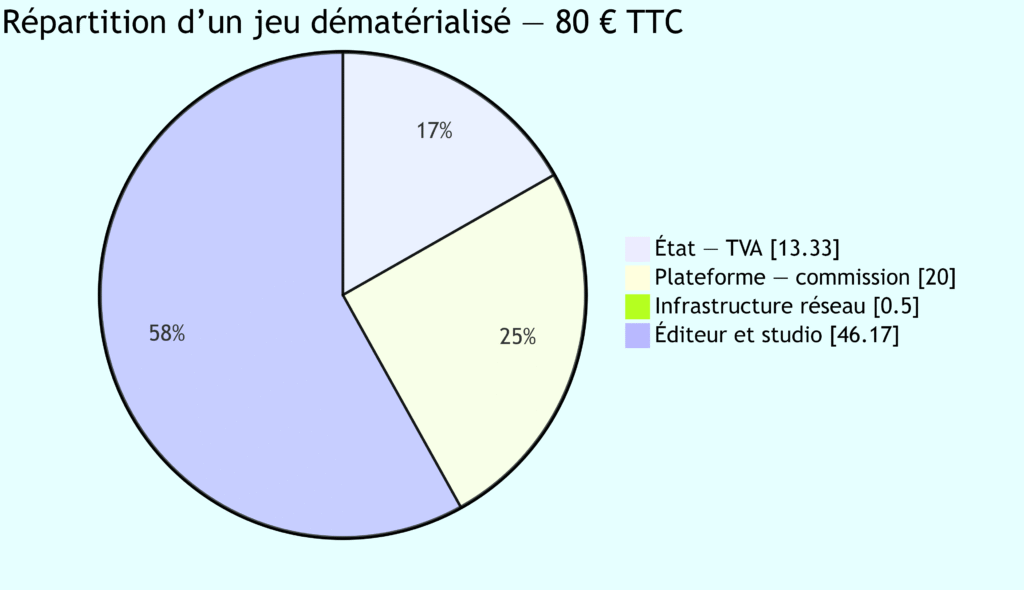
By cross-referencing the information available here15 and here16 on the French video game industry website AFJV (Agence Française des Jeux Vidéo) with broader information about consumer goods distribution, we can determine that publishers make almost 50% more from digital sales than from physical sales (69% of the pretax price instead of 47%, or a margin 1.46 times as large)! In concrete terms, if a publisher sells 1 million digital copies, it would have to sell 1,465,714 physical copies to bring in the same amount. The little table below breaks down that calculation for a game sold in France for €80 including tax (20% VAT).
| Recipient | Physical Format | Digital Format |
|---|---|---|
| Government (20% VAT in France) | €13.33 | €13.33 |
| Store / Platform | €20–€24 (gross margin for French retailers such as Fnac, Micromania, or Leclerc) | €20 (a flat commission of 30% of the pretax price charged by Sony PlayStation, Microsoft, or Steam—even as low as 12% for the Epic Games Store) |
| Console Maker (Royalties) | €8–€10 (fee paid to Sony/Nintendo for the right to press the disc) | Included in the platform’s 30% |
| Logistics & Manufacturing | €3–€5 (Blu-ray pressing, plastic, shipping, storage) | Approximately €0.50 (network infrastructure and download server costs—often covered by the online store, at that) |
| Publisher & Development Studio | €28–€35 (net revenue) | €46–€46.50 (net revenue) |
I don’t think we need to look much further than that… Besides, the industry’s players make no secret of it: Capcom17 explains that digital distribution is central to its financial turnaround, as it is for Electronic Arts18 according to credit rating agency Fitch Ratings. Ubisoft19 was boasting about it almost ten years ago, and we can also point to Take-Two20, for which digital content—primarily DLC and virtual currency—is central to quarterly results…
And don’t imagine that we, as players—but above all, in the video game industry’s eyes, consumers—will benefit from this windfall through lower average prices: the industry is facing an explosion in development costs (double what they were in 2019, and five times (!) what they were in 2015). The waves of layoffs across the sector since 202221 are a grim reminder of the video game industry’s struggle to find a reasonable business model: the market continues to grow22, but more slowly, with growth concentrated in mobile and a handful of giants23—think CoD or GTA. Basically, be the most popular or die. Add to that the fact that 78% of market revenue comes from a platform that has gone entirely digital (PC) and another that was digital from the outset (smartphones), and that the Chinese market is booming—now surpassing the U.S. market—despite being made up of players who have little experience with games on physical media, and I think you’ll agree there isn’t much of a fight left to put up!
Under these circumstances, prices aren’t about to drop below the recently crossed €80 threshold: to be the most popular, you have to be the flashiest, which means an enormous development budget; the most visible, which means an even more enormous marketing budget; and free of any controversy, which means even tighter control over your image. Conveniently enough, digital distribution makes that possible, as we’ll see below. But one thing at a time: going digital doesn’t just improve margins—it also makes it possible to control the selling price!


Selling price control
For a manufacturer, setting the sale price is crucial, but maintaining that price is just as important—perhaps even more so. Consumers need to be convinced that the product they buy is worth the asking price, and that means making sure they cannot find an equivalent for less—or making sure they are stupid enough to pay more just because it has a brand name on it! In video games, publishers have always had two enemies: the used market and cut-rate prices.
As for used games, the industry’s attempts to destroy that market are nothing new: I was already writing about the subject 15 years ago24. Publishers’ reasoning is simplistic: they only make money when a game sells new, so if that game is resold two, three, or four times, they lose that many sales. Preventing two other people from using a game after its original buyer would therefore guarantee two additional sales. But there is a major flaw in that reasoning: players who buy used may simply feel the game is not worth the asking price, or they may not have enough money to buy it new. In that case, the seller has not actually lost a single sale. To be a little cheeky, you could even argue that players who resell their games would not buy as many new ones without the resale money: the used market would actually be stimulating the market for new games!
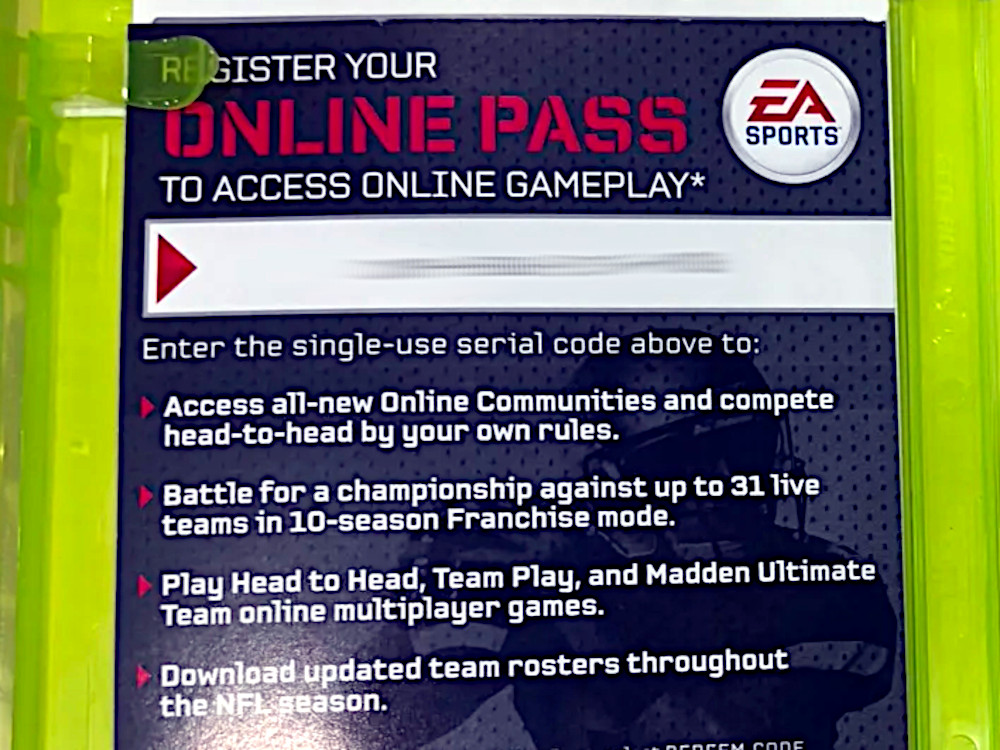
Naturally, the industry ignores those last two arguments and has spent years trying to eliminate used games: Electronic Arts’ Online Pass in 2009, “bonus” content for “Day One” editions, Microsoft’s abandoned plan to permanently tie physical discs to a single user account with the Xbox One in 2013, Sony’s DRM requiring an internet connection to validate games in 2026… All these initiatives have something in common: they try to encourage players to buy new by offering perks or making used games harder to use, without outright banning their use—even though doing so is technically possible. But why?
The reason, as it turns out, is that nasty old consumer protection law, always picking on those honest multinational corporations! Specifically, it is the principle of exhaustion of rights25—akin to the first-sale doctrine in the United States—which guarantees players/consumers the right to resell games they have purchased. That makes it flat-out illegal to prevent someone from using a physical game bought used, or even borrowed free of charge. But here is the catch: that principle applies to physical objects. In a 2019 ruling (the Tom Kabinet case26), the Court of Justice of the European Union held that exhaustion of rights does not apply to digitally distributed works, meaning those works cannot be resold used—in that particular case, an ebook. In France, the Court of Cassation, the country’s highest court for civil and criminal cases, confirmed that position in 2024 in a case brought by consumer advocacy group UFC-Que Choisir against Valve27. The situation is now crystal clear: publishers cannot prevent people from using physical games resold on the used market, but they can legally prevent anyone other than the original buyer from using a digital game. And 2024 was also the year Ubisoft’s director of subscriptions, Philippe Tremblay28, said gamers would get used to not owning their games…
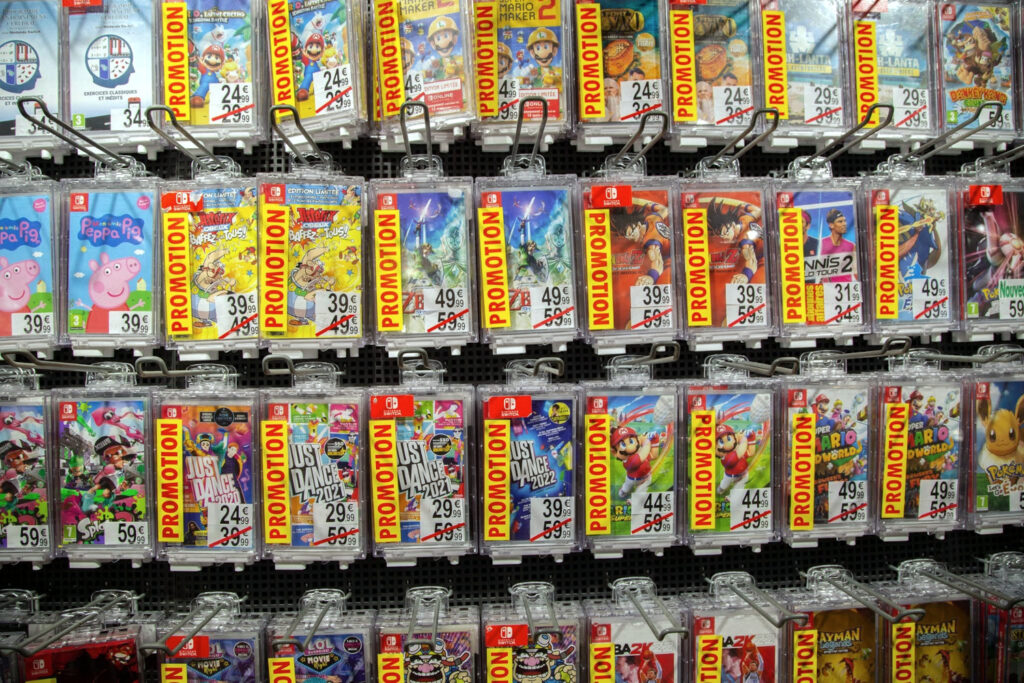
Going digital, then, lets the industry put a bullet in the back of the used market’s head—all in players’ best interests, of course! But wait, there’s more: it also stops retailers from doing whatever they want with their inventory, including—and especially—dumping it at rock-bottom prices! The price on the shelf is the subject of fierce negotiations between publisher and retailer. In France, the general rule is that retailers cannot sell below cost. But they can still cut their margins, particularly to clear out a game that is not selling well or, as big-box supermarkets frequently do, use it as a traffic driver. If French supermarket chain Leclerc offers you a game at a steep discount—GTA VI for €60 instead of €80, for example—it is not being nice. The store hopes to lure you in so you also pick up what it really wants to sell you: toilet paper and cases of bottled water! In theory, this has no effect on the publisher, which receives the same wholesale price. In practice, though, it plants the idea in consumers’ heads that a new copy of GTA VI can be had for €60, so paying €80 means getting ripped off! That little refrain might eventually get them thinking and—who knows?—lead them to conclude that €80 for a game, a little over a day’s pay at France’s minimum wage, is too expensive. Bad for business, that!
Of course, the publisher can try to “buy off” the retailer and bring it back into line by paying for advertising or endcap placement. It can also apply pressure by adjusting back-end rebates or raising the wholesale price. But that carries risks, especially when the retailer is a major player. Getting into a spat with the neighborhood game store is one thing—particularly since that store cannot afford a fight and will do whatever it is told. Getting into a spat with Leclerc or Carrefour is a bigger pain in the ass. More than half of physical games are sold through large supermarkets, so publishers cannot do without them. For those supermarkets, however, video games are, as we have seen, just one traffic driver among many. In that showdown, the publisher no longer has the upper hand…
And that is before we even get to France’s legally designated seasonal clearance sales, when unsold games can legally be sold below cost. Informed, patient players/consumers can choose to postpone that sacred “purchase decision” until clearance season—and eventually stop buying games at full price altogether! Not good for business…
That is where digital distribution comes to the rescue once again: no physical copies means no inventory, and therefore no clearance sales! (Steam “sales” and the like are legally just promotions, not clearance sales in the French statutory sense, despite borrowing the label.) And since publishers set the sale price themselves and retain control over distribution—even through a third-party store like Steam—they can keep prices exactly where they want them. An online store that takes a percentage of each sale has no incentive to lower the price, either. No more negotiating with retailers or spending money to persuade them to behave… After allowing distributors to increase their margins, going digital also lets them exert much tighter control over the sale price. So this is first and foremost a financial issue. But it is also a matter of messaging!

Controlling the message
As it happens, image control is precisely the last kind of control that digital game distribution makes possible. On that note, what do Cyberpunk 2077, Fallout 76, and Assassin’s Creed Unity have in common (and the list goes on…)? All three launched riddled with bugs, some funny, others game-breaking (Sony even pulled Cyberpunk 2077 from sale and offered refunds!), leaving lasting dents in the reputations of the IPs involved. (IP stands for intellectual property: it is what people who like to sound important—I mean, people who work in marketing—call a series.) In the age of viral videos and all the rest, that’s a pretty bad look, especially since one or two updates were enough to fix those bugs, which had more to do with rushed releases than any actual incompetence on the developers’ part. And physical releases play a role in that rush: the final stretch of development is normally devoted to last-minute quality checks and emergency fixes, but a physical release cuts that time short by one to two months of pure logistics. The developer sends a “final” version of the game to the platform holder (Sony, Microsoft, or Nintendo), which runs a series of technical and security checks before certifying the game and approving its release. A “Gold” version is burned to disc and serves as the reference for mass production—what the industry calls a gold master29.
Once that stage is complete, the discs still have to be pressed, packaged, packed into boxes, loaded onto a truck, and driven to the retailer, which finally puts them on shelves. All those little steps take time, and they have to be completed far enough in advance for the game to hit that famous “launch window” the salespeople love so much! In an industry that has turned running late into an art form, it is hardly surprising that the shipped game contains serious flaws—even though those flaws have often already been discovered during the internal testing that continues throughout the logistics phase, and fixed in the now-inevitable “day-one” patch30, a fixture for a good decade or so.
Ultimately, players do not really have to suffer through those bugs. But in the age of social media and influencers who make their money from fake emotion, meaningless drama, and virality, any bug discovered becomes ammunition for a smear campaign and misinformation. The bigger the franchise, and the more clicks, views, and “likes” it generates, the bigger the campaign! So publishers see their brand dragged through the mud over a few quickly fixed bugs, all to fatten the bank accounts of the talentless clowns who have been poisoning the internet for nearly two decades now! But if there is no physical release, the “day-one patch” changes can be incorporated directly into the game being distributed. And if a bug is discovered after launch, it is possible to “erase the evidence”: a game on disc will still contain that bug years after release, and unless updates are made mandatory—which is legally very complicated for offline games—it can still be seen and reproduced. That same bug will no longer be accessible once the downloadable files have been changed.
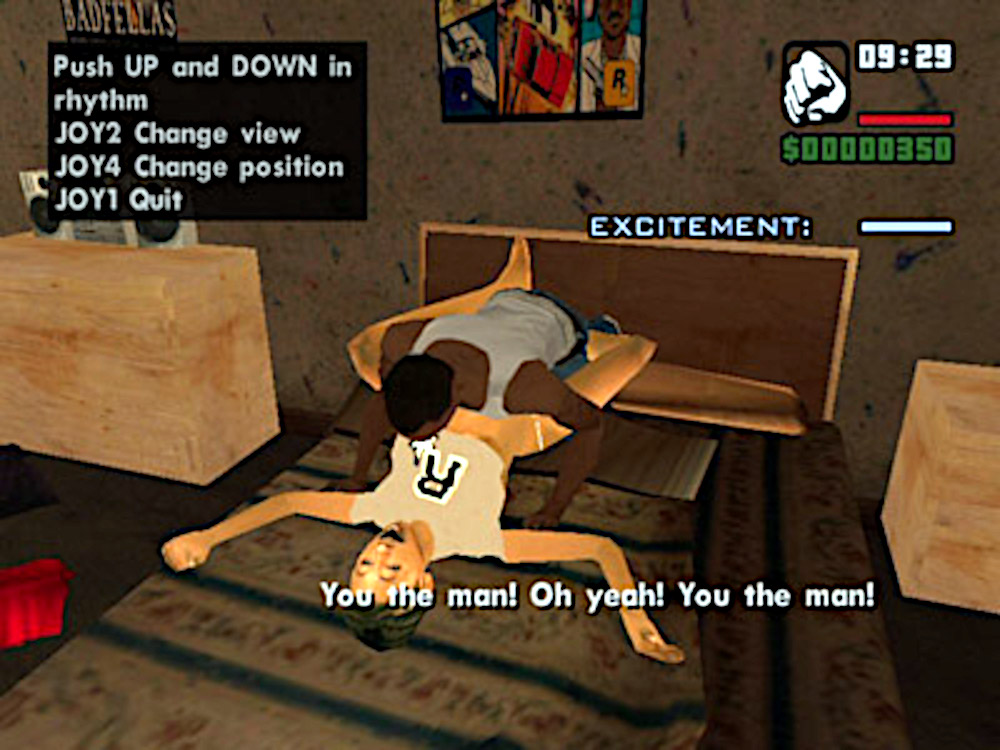
What goes for bugs also goes for controversies! Longtime players may remember the “Hot Coffee” sex minigame31 in GTA: San Andreas, disabled before release but discovered and made public by modders. With a digitally distributed game, simply deleting the hidden files would have been enough to avoid the legal risk—something that was impossible with discs scattered across millions of homes! Or take the scandal involving Japanese actor Pierre Taki, who had a habit of powdering his nose between voice-recording and character-modeling sessions for Judgment (Judge Eyes in Japan). SEGA had to rush to remodel the character and record new dialogue to erase every trace of the actor until the public found something else to be outraged about. Already expensive and time-consuming, the operation became even more complicated in Japan, where the game was already being distributed: inventory had to be recalled and destroyed—which costs money—while copies of the Pierre Taki version remain in circulation, each one proof of his involvement in the project. Two headaches SEGA could have done without!
Finally, the last obstacle to complete control over messaging that publishers spent years dealing with was video game journalism. Traditionally, physical copies were sent to journalists, often in various stages of near-completion, and those journalists played the game to deliver their verdict and that all-important score. All of which carried the risk that a critic might pull no punches and write a scathing review, sometimes partly based on bugs that would be fixed by release. Various methods were introduced to counter this: embargoes enforced through nondisclosure agreements (to receive the game, journalists agree not to publish their review before a specified date—sometimes after release!—and not to disclose certain details), early access, preorder bonuses… All easy enough to control as long as no physical copies are floating around in the wild. Journalists cannot publish a review before the agreed date if, instead of receiving a disc a few days beforehand, they only get a download key that very morning—which also guarantees a rushed review! Indeed, many major games now engage in “review-spoofing” or the “vertical slice” approach: the opening is polished to a shine to impress reviewers in a hurry32, who may be fooled into judging the game on that first impression alone, masking a much duller experience afterward. And the best part? The technique works on players too, under a different name: “first-two-hours syndrome”! Why two hours? Because that is the playtime threshold beyond which Steam no longer refunds a game33. To make a digital sale final—with no cheap used copy coming back onto the market, if you read the first part carefully!—all you have to do is keep the player interested for two hours. No wonder some major releases of the past few years—The Invincible, Suicide Squad: Kill the Justice League, and Star Wars Outlaws—essentially offer a killer prologue followed by a dull, repetitive game. €80 for a two-hour game is still a great deal—for the developer!

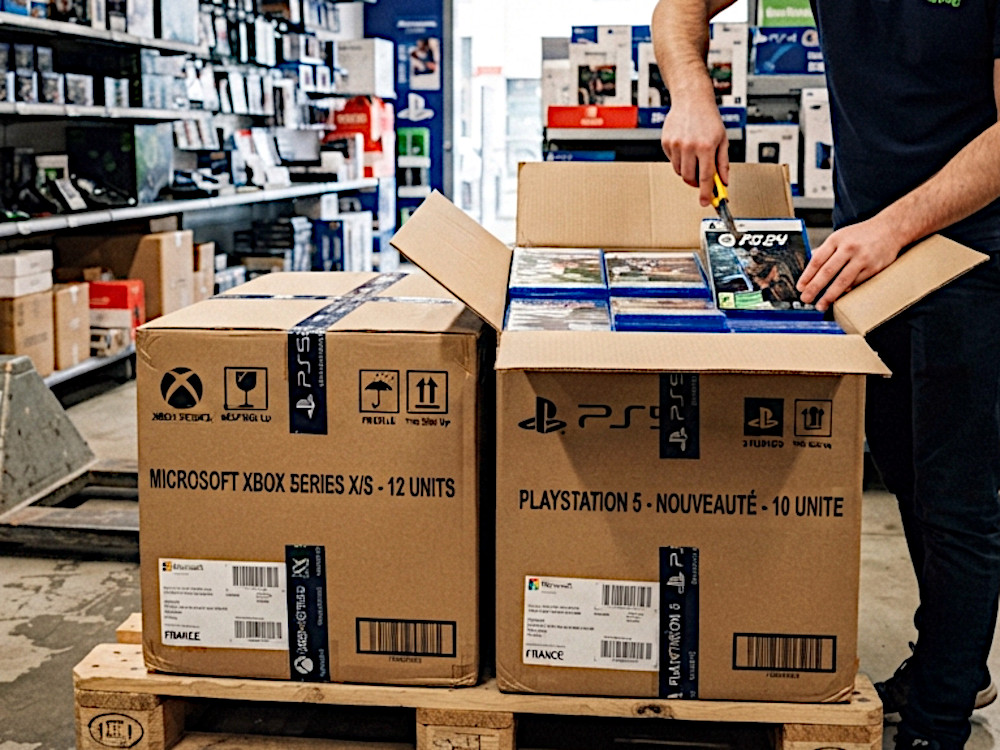

Carbon footprint control
Okay, I admit it: that subheading is a bit of a stretch. I should have called it “greenwashing”34, but I didn’t want to break the “control” streak :p
Because, as you can probably guess, the video game industry’s major players—and multinational corporations in general—could not give less of a flying fuck about carbon footprints or pollution in the developing world… But claiming to care does wonders for the brand, and even gives purely financial decisions an eco-friendly flavor. The first to make a move was French—from Brittany, no less, the bastard!—namely Ubisoft, which announced in 2010 that it would stop including printed game manuals in its boxes to save trees35. The initiative was grandly dubbed “Go Green”; these days, its eco-opportunistic mantra is “Play Green”! I’m sure the prospect of avoiding millions of print runs and making the boxes lighter—and therefore cheaper to ship—had absolutely nothing to do with that decision. Meanwhile, plenty of reports make it clear that going digital is not environmentally neutral: it simply shifts the problem elsewhere36.
But the floodgates were open: industry players profess concern for the planet’s future37 and fund studies showing that physical games cause more pollution than digital ones38. “Zero plastic, zero transportation,” as the once-fashionable marketing line went. Of course, reality is more complicated, and digital distribution causes pollution too39; the question is which causes more… Still, a little positive PR can’t hurt an industry that has gotten itself tangled up in the trap of “wokeness”40 and, as I mentioned above, has spent the past four years treating its workforce with pretty revolting brutality. The unemployed will be able to play ideologically censored games, but at least they’ll be doing it surrounded by trees (that’s what happens when you can no longer afford a roof over your head!).
Bob is a cynical, reactionary jerk. Sure, but that’s not the whole story! There is, of course, a financial motive behind all this, one that largely escapes the public: binding laws on recycling unsold inventory are multiplying. In France, that means the AGEC anti-waste law41, which has prohibited the destruction of unsold nonfood products since 2020. Burning inventory to prevent it from being resold at bargain-basement prices, as used to be standard practice, or burying game cartridges in the desert—those days are over. Products now have to be put to use through donations or resale to closeout retailers such as France’s Noz, which directly undermines the price control discussed earlier, or sent through recycling channels that charge far more than the local incinerator… Unsold inventory is therefore no longer just a threat to price control: it is now a substantial financial burden. And these regulations are popping up everywhere: the EU’s ESPR regulation, with national legislation such as Germany’s Kreislaufwirtschaftsgesetz brought into line—I’m only mentioning that law for the pleasure of dropping that monster compound word!—state-level laws in the United States, such as New York’s Fashion Act, and even a circular economy law in China. These new regulations are the final nails in the coffin of physical games. But ultimately, is that such a big deal for us game lovers?

The risks of going digital with video games
Risks to consumer rights
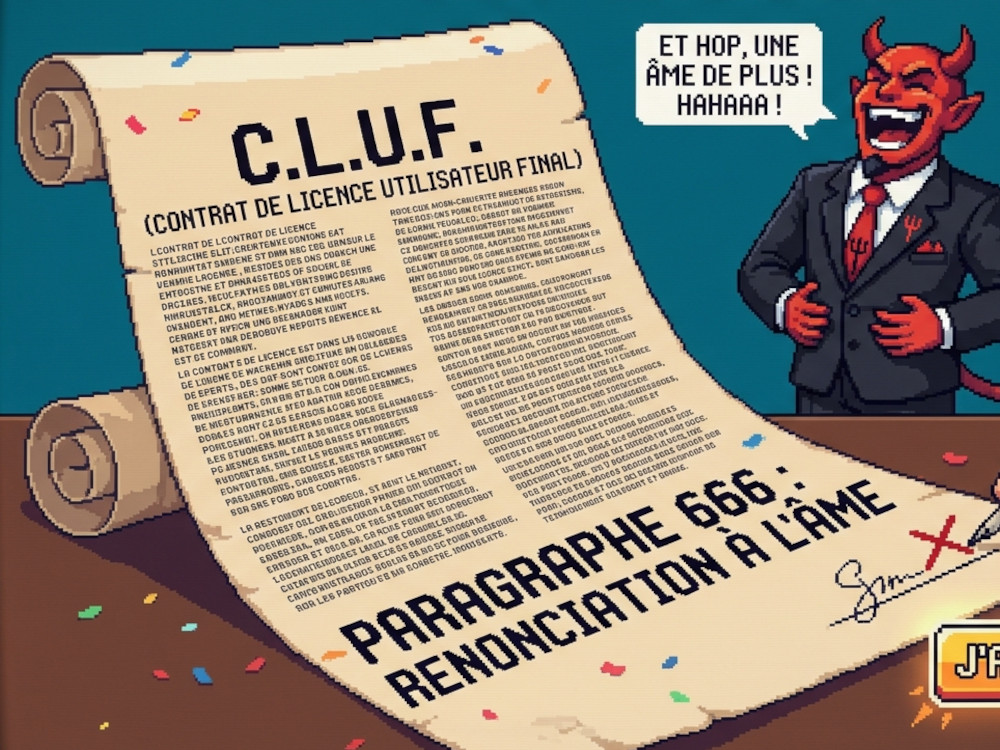
The question matters, but the answer is surprisingly simple and legally clear-cut. Consumers do not own their digital games. Period. Buying a digital game actually means buying a license42. By its very nature, a license comes with terms of use. Chief among them: the license holder’s rights are limited to what is specified in the End User License Agreement (the EULA, that thing you accept without reading when you launch a new game), and the license can end, either after a certain period or, more often, when specified conditions are met. Those conditions may boil down to “the seller ends support.”
Nothing new under the sun, though, given how much game ownership has given way to licenses in recent years. Basically, anything that is not on the physical disc—online multiplayer and DLC in particular—has operated under this licensing model for a long time, allowing any publisher to pull the plug on a game’s servers once it is no longer profitable. The publisher does not stop players from using the disc they own; logically, single-player mode remains accessible. But publishers often arrange things so that single-player offers little of interest without the accompanying online license. Want a concrete example? I recently bought the golf game PGA 2K23 for next to nothing on Amazon: I am not interested enough to pay full price, and I do not particularly care about keeping up with the latest tournaments (remember what I wrote earlier about the used market). Well, guess what? Even single-player requires a connection, and the game announces that online support will end on January 1, 2027, inviting players to buy a newer version… The catch is that no connection means no career mode: that lovely disc I own will only let me play a few courses, with no progression, nothing but beginner equipment, and no rankings! A fine example of planned obsolescence made possible by going digital.
Of course, someone will bring up the expiration of the sports licenses involved, which probably explains at least part of the decision to end support and remove licensed game elements. Even so, this example is typical of our future in a world governed by licenses, and it is not looking too rosy! The Terms of Service (those famous ToS you never read) all stipulate that license holders can lose access for all sorts of reasons, and since consumers accept those terms, they cannot complain when they are enforced. After all, playing video games is not a constitutional right! Still, the law might help curb the excesses to come as the industry heads toward an all-digital future. As noted above, while the European Commission did not immediately act on the Stop Killing Games initiative, it did commit to putting the issue on the table43. In California, a proposed “Protect Our Games Act”44 could lead to several new rules in 2028, including a legal requirement to give advance notice before shutting down servers and an obligation to make games playable offline after support ends. It’s a first step…
Risks to video game preservation
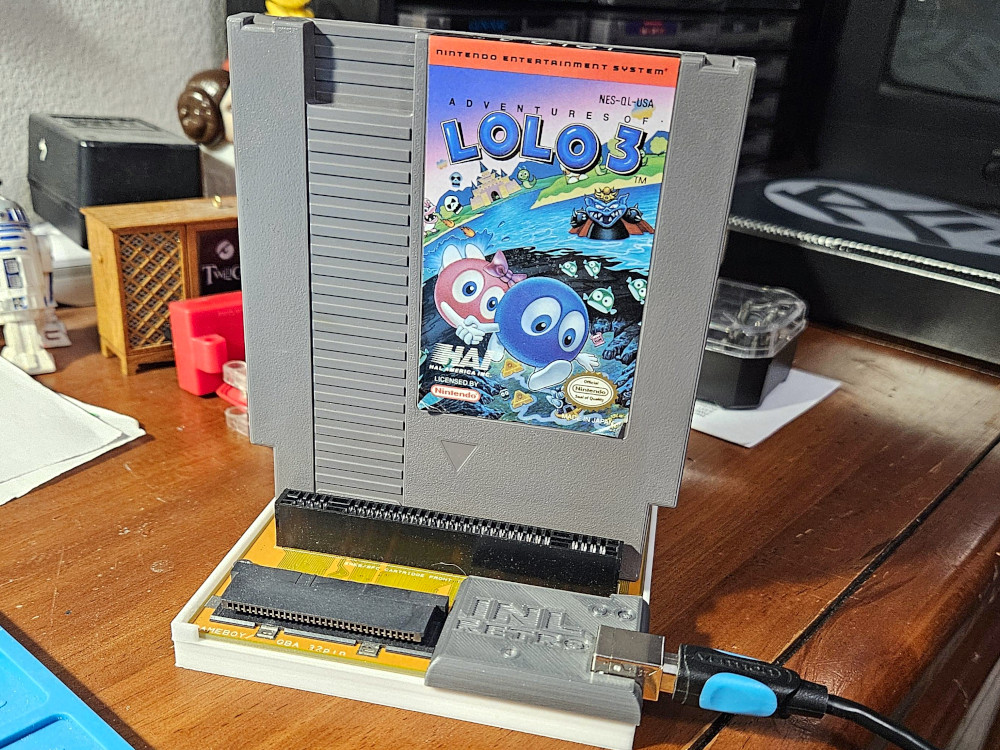
The video game industry is not particularly nostalgic—unless there is money in it. Studios rarely keep their working documents, canceled projects, or beta builds, and the industry’s major players only bring up their past when it might make them a few bucks. But some players have been bending over backward since the beginning to preserve “the archives,” both for the sheer pleasure of playing (emulation, anyone?) and because of the cultural importance of a relatively young medium that already plays a crucial role in contemporary culture. But how do you preserve digital games protected against copying?
While most older games have now been “dumped”—copied off their original media—that often only became possible years after release, once cracking techniques caught up with and overcame the copy protection. Keeping the original physical media intact until they could be cracked was an essential prerequisite for preserving the games themselves. But what do you do with games that will never have physical media to preserve? One clever tinkerer did manage to put their Steam games on hard drives that they use like game cartridges45, but that relies on Steam’s ability to copy a game to an external drive and launch it offline. The whole setup still depends on authenticating the Steam account that “owns” the games, though, and when Steam disappears—which will happen sooner or later—the games will become unusable and be lost…
That leaves piracy. But it is no cure-all: pirates are not patrons of the arts, and they are not interested in small indie games… The issue briefly made the news, complete with some good old-fashioned political co-opting by our homegrown French lefties46, but now seems to have slipped back into oblivion. Quite an irony, just as preservation group MO5.com has finally made its Video Game Museum a reality47 and Nintendo, which has always shown more respect for its own history than most of the industry, has opened the Nintendo Museum48.
Bob’s conclusion
His views, and his alone!
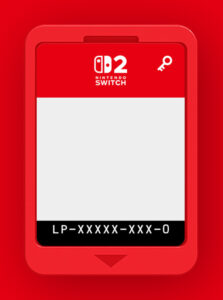
Not to play Nostradamus, but I think the shift to digital will go all the way this time, probably even spelling the end of game consoles as we know them. The last attempt—an abrupt one—was the PSP Go more than fifteen years ago, but it came too soon for several reasons: the technical hurdles of downloading games, reliance on specialty retailers to sell consoles, resistance from consumers who saw no benefit in going digital at the time… Today, things have changed: fiber internet has become widespread—at least in the United States, Europe, Japan, and China, the only markets that matter to the video game industry—specialty stores have had their lunch eaten by online retailers, and consumers use digital services constantly now that Spotify, Netflix, and cloud services are part of everyday life. Besides, if Sony is trying again and Microsoft is about to follow, while even Nintendo is leaving the door open with its Game-Key Cards48—which I can’t quite decide whether to call hypocrisy or an attempt to keep both sides happy—that must mean the market is “ready,” as sales figures from recent years demonstrate. As I said earlier, players have voted with their wallets.
But maybe most players really are brainless consumer sheep, making choices that go against what true g@m3rz want? That’s an easy, slightly pompous generalization, if you ask me (which you are, since you’re reading this!). The appeal of going digital is obvious from the entertainment industry’s perspective. But it also has some advantages for players: bug fixes, instant availability, convenience (I catch myself grumbling when I have to get up to swap the cartridge in my Switch 2, having played mostly on PC for the past two or three years!), to name just the most obvious. Besides, region locking disappeared with the shift to digital, and take it from an old-school game lover: that was a real headache for enthusiasts a few years—or should that be decades?—ago! Ultimately, the question is whether those benefits outweigh the drawbacks for players outlined above.
Consumer rights? Honestly, in everyday use, how much difference is there between owning a game and holding a license to use it? That leaves buying and selling used… Frankly, games that hit the bargain bin used tend to get discounted on digital storefronts around the same time, with no shortage of bundles, Steam sales, and the like. And new releases? Walk into a store like France’s Micromania—think GameStop—and you’ll see that recent used games sell for almost as much as new copies. Sometimes even more, when the new copy is on sale. Go figure! That leaves the heavy gamers who fund new purchases by selling their old games: given the often laughable trade-in offers, those players moved to subscriptions like Game Pass a long time ago.
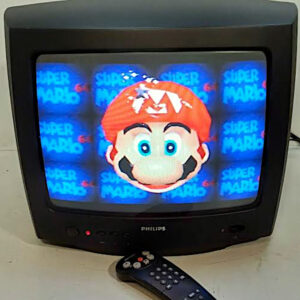
What about preserving gaming history and being able to play after support ends? The two issues are connected, because preservation is pointless if you can no longer play the game: what good are dozens of NES cartridges without a working NES and an adapter to connect it to a modern display? None! Unless you’re helping fuel speculation in the retro gaming market, which, to my mind, is looking a lot like a full-blown speculative bubble50! Honestly, the media will eventually become unusable, and we’ll soon run short of CRTs for playing under original conditions. Pirated copies and emulation have done far more for video game preservation than keeping physical media, and going digital will not stop the pirates. Not to mention that being digital and freed from the original medium is in emulation’s very DNA! And online gaming? First, let’s remember that digital distribution changes absolutely nothing about how online services work: players have never owned them, and publishers have always had the right to suspend or shut them down. That hasn’t stopped player communities from keeping their favorite games alive51! And if nobody copies the game or saves the server? First, if that happens, maybe the game doesn’t need to be preserved. Second, Bob can guarantee that a physical copy sitting in a damp cardboard box at the back of the garage for ten years won’t have preserved the software either!
Arguing by example may not be particularly rigorous, rhetorically speaking, but Bob is going to talk about himself. I own a little over a thousand boxed games, complete with manuals, from the Atari 2600 through the Switch 2. Apart from a handful picked up at flea markets or on eBay to heal the childhood trauma of not being spoiled enough, they all come from my long life as a game lover: I bought them when they were in stores, whether new, used, or on clearance. They entertained me, and one day I carefully closed each box, adding it to what has now become a collection. For years, I’ve moved that collection as my life has changed, needing more boxes every time. This summer, I moved again, and as I was wrecking my back carrying a box of old games on the stairs, the absurdity of the situation hit me square in the face! For years, I’ve been storing, moving, and storing again those thousand-odd games—along with the consoles needed to play them, the controllers, and everything else. But how many times have I actually pulled out a game since closing its box? Every year, I replay several classics, particularly Super Mario Bros. on the NES, which I’ve been firing up regularly for nearly forty years. I own the standalone NES version, the NES combo cartridge with Duck Hunt, the Famicom version, Super Mario Bros. Deluxe on Game Boy Color, and both the Classic NES Series and Famicom Mini releases on Game Boy Advance. That’s without counting the different versions of Super Mario All-Stars or the emulated version in the Switch’s NES app… And yet I haven’t used the original cartridge—or any of the others—in at least twenty years: I always play through emulation, just as I do with every classic I revisit. So yes, I own an enormous pile of cartridges. But ultimately, the physical media and the legal rights they give me are of no use to me today, and back when those games were commercially supported, they gave me nothing more than a license to use them would have…
Bob is surprised by his own conclusion. But researching—and, above all, thinking through—what will probably be the defining gaming topic of 2026 (though I’m eagerly hoping for riots when GTA VI’s servers buckle at launch!) has changed my mind about digital distribution, despite how firmly I once held my position. Then I remembered the Flash games that flooded the early web: when Adobe announced in 2017 that Flash would end in 2020, predictions of the irreversible loss of this pop-culture “heritage” followed, along with concerns about the future of gaming on the internet. Then projects emerged to preserve Flash gaming history, and today a site like Flashpoint Archive52 can boast of making 200,000 Flash “games,” rescued from oblivion, available to anyone curious enough to explore them…
In short, I think the seemingly irreversible shift to digital will ultimately have little real impact in practical terms, while it has brought a welcome breath of fresh air53 to our little world over the past fifteen years! Let’s remember that video games are, first and foremost, a frivolous pastime, and we shouldn’t turn them into something bigger than they are. Bob will keep playing, physical media or not. And if you want to help video games, the question isn’t whether you buy physical or digital: it’s whether you choose an innovative, ambitious game over the tired sequel to an all-too-comfortably established franchise.
Bob Dupneu
- https://nintendo.fandom.com/wiki/Radar_Scope
- https://www.youtube.com/watch?v=y2pzuoA6rSY
- https://gamecritx.com/blog/the-evolution-of-steam-from-valves-internal-tool-to-the-global-pc-gaming-standard
- https://www.pcmag.com/articles/7-xbox-innovations-that-changed-console-gaming-forever
- https://www.numerama.com/pop-culture/18606-la-psp-go-disparait-dans-l-indifference-generale.html
- https://www.dualshockers.com/sonys-andrew-house-talks-about-the-shift-from-physical-to-digital-download-games-on-ps4/
- https://www.rockstargames.com/newswire/article/5171972o3ak5oa/pre-order-grand-theft-auto-vi-on-june-25
- https://blog.fr.playstation.com/2026/07/01/la-production-de-disques-physiques-se-termine-en-janvier-2028-pour-les-nouveaux-jeux-prevus-sur-consoles-playstation/
- https://www.univers-simu.com/news/xbox-disc-to-digital-jeux-physiques-numeriques-127065/
- https://www.windowscentral.com/gaming/xbox/xbox-ceo-asha-sharma-speaks-at-internal-town-hall-we-must-strengthen-for-cxbox-series-x-s-xbox-helix-and-xbox-game-pass
- https://www.campus-des-ecoles.fr/design-digital/gaming-marche-jeu-video-chiffres/
- https://www.culture.gouv.fr/de/mc/content/download/322468/file/Chiffres-cles-2022-Jeu%20video-Fiche.pdf?version=1
- https://www.univers-simu.com/news/jeu-video-physique-france-dematerialise-ventes-126036/
- https://citizens-initiative.europa.eu/stop-destroying-videogames-commissions-reply-european-citizens-initiative_fr
- https://afjv.com/chiffres/030718_chiffres05.htm
- https://afjv.com/news/6262_les-changements-generes-par-la-dematerialisation.htm
- https://note.com/kessan_yomijun/n/n4b3580bb9242?hl=en
- https://www.fitchratings.com/research/corporate-finance/fitch-affirms-electronic-arts-at-a-outlook-stable-23-10-2024
- https://www.lesechos.fr/2017/02/ubisoft-ameliore-la-rentabilite-de-ses-jeux-162151
- https://ir.take2games.com/static-files/de7eeb58-9a3d-44c4-8407-9b0453cae8a4
- https://fr.wikipedia.org/wiki/Vagues_de_licenciements_collectifs_dans_l%27industrie_du_jeu_vid%C3%A9o_(2022-)
- https://afjv.com/news/12060_marche-mondial-jeux-video-chiffre-affaires-2026.htm
- https://bigmedia.bpifrance.fr/nos-actualites/jeux-video-2025-les-faits-et-chiffres-qui-bousculent-lindustrie
- https://www.bobdupneu.fr/2011/08/12/du-zonage-de-la-3ds-et-de-ses-consequences/
- https://www.dreyfus.fr/lexique/lepuisement-des-droits/
- https://infocuria.curia.europa.eu/tabs/document?source=document&text=&docid=221807
- https://infocuria.curia.europa.eu/tabs/document?source=document&text=&docid=221807
- https://www.gamesindustry.biz/the-new-ubisoft-and-getting-gamers-comfortable-with-not-owning-their-games
- https://www.rom-game.fr/news/5726-jeu+gold.html
- https://level-1.fr/pourquoi-y-a-t-il-des-patchs-day-one-sur-certains-jeux/
- https://www.rockstarmag.fr/gta-san-andreas-dan-houser-revient-sur-laffaire-du-hot-coffee-et-cible-le-gouvernement-americain-de-lepoque/
- https://tiredoldhack.com/2015/02/04/the-corrupt-world-of-video-game-reviews-part-1/
- https://store.steampowered.com/steam_refunds/?l=french
- https://www.hellocarbo.com/blog/communaute/greenwashing-exemples/
- https://www.newgamenetwork.com/news/1087/ubisoft-going-green/
- https://culture-ge.fr/fiches/l-empreinte-ecologique-du-numerique-le-poids-du-virtuel
- https://www.unep.org/news-and-stories/story/video-game-industry-levels-climate-change
- https://www.gamekult.com/actualite/selon-une-etude-les-jeux-physiques-sont-100-fois-plus-polluants-que-les-versions-numeriques-3050866628.html
- https://www.ademe.fr/presse/communique-national/streaming-vs-cd-ou-dvd-liseuse-vs-livre-papier-quels-sont-les-impacts-environnementaux-de-la-digitalisation-des-services-culturels/
- https://www.bobdupneu.fr/2025/03/16/2024-annee-de-politisation-du-jeu-video/
- https://www.legifrance.gouv.fr/download/pdf?id=tIvlngK1-pPYKGFzbZJvgnB0La5rYk6ys5dm_FwTPZs=
- https://pcs-avocat.com/actualites/2026-08-jeux-video-dematerialise-droit-propriete/
- https://www.fluxdigitalpolicy.com/fluxexplains/european-commission-statement-on-stop-killing-games
- https://www.ashurstperkinscoie.com/en/insights/california-moves-to-regulate-end-of-life-requirements-for-digital-games/
- https://www.reddit.com/r/pcmasterrace/comments/1ux13ui/steam_game_cartridges/
- https://www.journaldugeek.com/2026/10/07/la-france-insoumise-veut-sauver-le-jeu-video/
- https://museedujeuvideo.org/fr
- https://museum.nintendo.com/index.html
- https://chocobonplan.com/bon-a-savoir/gamekey-card-nintendo
- https://polkastarter.com/blog/most-expensive-video-games-ever-sold
- https://gamerant.com/dead-games-kept-alive-by-community-servers-fans/
- https://flashpointarchive.org/
- https://www.bobdupneu.fr/2011/07/02/la-dematerialisation-des-jeux-une-chance-pour-la-creativite/

